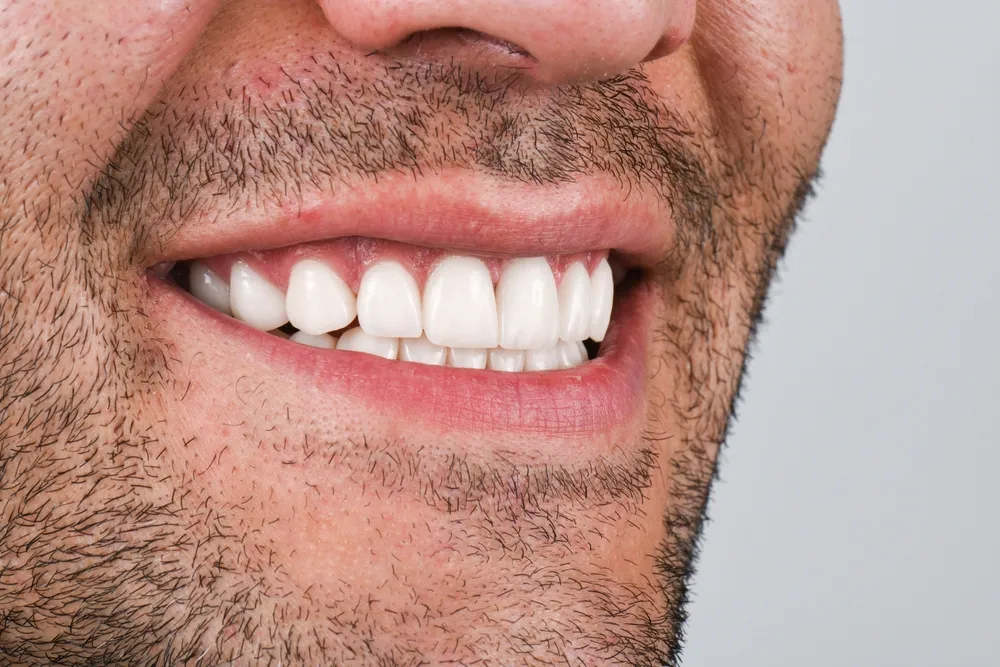
E.max veneers resist staining far better than natural teeth or composite restorations. The lithium disilicate glass-ceramic material holds its colour with remarkable stability. However, patients sometimes notice their veneers look darker or yellower after several years. This apparent discoloration rarely comes from the ceramic itself. Instead, it stems from the resin cement, veneer margins, surface deposits, or changes in the underlying natural tooth. Palla et al. (2018) tested IPS e.max CAD, IPS e.max CERAM, and IPS e.max Press specimens after thermocycling and immersion in coffee, tea, and red wine. All groups demonstrated color changes below the clinically perceptible level, except non-glazed pressed specimens in tea (Palla et al. 2018). Understanding these distinctions helps patients maintain their smile and seek appropriate care when discoloration appears.
What Are E.max Veneers Made Of?
What Is Lithium Disilicate Glass-Ceramic?
Lithium disilicate is a glass-ceramic material. Dental laboratories use it to craft thin, durable veneers. This material offers excellent aesthetic translucency. It transmits light in a way that mimics natural enamel. It also provides high colour stability and sufficient strength for anterior restorations. Dentists choose lithium disilicate because it combines beauty with durability. The material resists fracture and maintains its optical properties over many years. Research by Alawawda (2025) confirms that glazing enhances the long-term color stability of lithium disilicate restorations compared with polishing. This stability makes E.max a preferred choice for cosmetic dentistry.
Why Does Material Structure Affect Stain Resistance?
E.max ceramic has a dense, non-porous structure. Natural enamel contains microscopic pores and organic components. These pores allow pigments from coffee, tea, and wine to penetrate tooth structure. Composite resin veneers also contain resin matrix components that absorb pigments more readily. Lithium disilicate lacks these absorbent pathways. Its crystalline structure blocks pigment penetration. This structural difference explains why E.max veneers resist staining better than natural enamel or composite alternatives. Atala (2026) compared feldspathic ceramic, hybrid ceramic, resin nanoceramic, and microhybrid resin composite after coffee immersion and simulated toothbrushing. Ceramic-based materials showed greater resistance to discoloration, whereas resin-based materials exhibited clinically perceptible color changes (Atala 2026).
Do E.max Veneers Actually Stain?
Are E.max Veneers Highly Resistant to Staining?
Yes. Scientific studies confirm that lithium disilicate ceramics show minimal colour change over time. The glazed ceramic surface creates a smooth, impermeable barrier. Pigments from food and drink cannot penetrate this surface easily. Palla et al. (2018) recorded that all lithium disilicate groups demonstrated color changes below the clinically perceptible level after aging and beverage immersion, except non-glazed pressed specimens exposed to tea. This colour stability makes E.max a preferred choice for long-term aesthetic restorations. Alawawda (2025) conducted a systematic review and meta-analysis comparing polished and glazed lithium disilicate. The pooled analysis showed that polished lithium disilicate exhibited significantly higher color change values compared with glazed lithium disilicate, indicating greater color change over time (Alawawda 2025).
Does Stain Resistance Mean Complete Immunity to Discoloration?
No. The veneer itself may stay colour-stable while the overall appearance changes. The visible surface of a veneer restoration includes more than just the ceramic. Marginal staining, cement discoloration, plaque accumulation, and changes in the underlying tooth can all create the illusion that the veneer has stained. Patients should understand that the ceramic material remains stable even when the restoration looks different. Miletic and Ronagh (2025) evaluated four resin cements and lithium disilicate veneer restorations after staining in black tea. They found that resin cements influenced colour changes in veneer restorations post-staining, with colour differences associated with initial cement translucency (Miletic and Ronagh 2025).
Why Do E.max Veneers Sometimes Look Yellow or Darker Over Time?
Why Do Stains Appear Around Veneer Margins?
The veneer meets the natural tooth at a microscopic junction. This margin may expose small amounts of resin cement. Surface irregularities at this junction can trap pigments. Over time, coffee, tea, and other chromogens accumulate in these microscopic spaces. The margin itself may darken while the central veneer surface remains bright. This creates a visible line or shadow at the edge of the veneer. Vichi et al. (2018) examined finishing and polishing effects on lithium disilicate roughness. They found that proper finishing reduces surface roughness and improves gloss, which helps prevent pigment accumulation at margins (Vichi et al. 2018).
Can Resin Cement Discolor Over Time?
Yes. The bonding material beneath and around the veneer can change colour. Resin cements contain organic components that may degrade or absorb pigments. This discoloration becomes visible near the veneer edges. Exposed cement absorbs pigments from the diet and creates a darker or yellowish appearance. The ceramic itself remains unchanged, but the cement darkens the overall aesthetic. Hoorizad et al. (2021) reported that Variolink cement showed the highest degree of discoloration following accelerated aging, with color change values reaching 10.4, while ceramic veneers alone exhibited minimal change (Hoorizad et al. 2021). Miletic and Ronagh (2025) similarly found that the colour change of cemented veneers ranged from 2.7 to 3.9 depending on the cement type, with decreased translucency after staining across all groups (Miletic and Ronagh 2025).
Can the Natural Tooth Underneath the Veneer Change Colour?
Yes. The underlying tooth continues to age and change. Root canal treatment, trauma, pulpal changes, and internal discoloration can darken the tooth structure. E.max veneers possess some translucency. This translucency allows the colour of the underlying tooth to influence the final appearance. A darkening tooth beneath a translucent veneer makes the entire restoration look darker. The ceramic has not stained, but the foundation beneath it has changed. Khim et al. (2018) demonstrated that root canal sealer remnants cause coronal discoloration that progresses in a time-dependent manner. Their study showed that dentin bonding agents can reduce this discoloration but cannot prevent it completely (Khim et al. 2018). Ioannidis et al. (2013) confirmed that both MTA-based and zinc oxide eugenol-based sealers induce measurable crown discoloration over time (Ioannidis et al. 2013).
Does Surface Wear Reduce Veneer Brightness?
Yes. Surface wear can reduce gloss and create a dull appearance. This is not true colour change. It is a loss of surface shine and brightness. Polishing and glazing maintain the reflective surface that makes veneers look bright. When this surface polish diminishes, the veneer may appear darker or less vibrant even though its intrinsic colour remains stable. Brescansin et al. (2021) found that grinding increased surface roughness, reducing translucency and light transmittance, leading to a decrease in lightness values. Conversely, polishing reduced roughness and improved translucency (Brescansin et al. 2021). Vichi et al. (2018) showed that proper finishing and polishing systems significantly decrease surface roughness and improve gloss on lithium disilicate ceramics (Vichi et al. 2018).
Can Coffee and Tea Stain E.max Veneers?
How Do Coffee and Tea Affect Dental Restorations?
Coffee and tea contain chromogens. These pigments bind to organic surfaces. Natural teeth absorb these pigments readily because enamel contains organic components and microscopic pores. E.max ceramic lacks these absorbent features. The chromogens cannot penetrate the dense lithium disilicate structure. Palla et al. (2018) immersed lithium disilicate specimens in coffee, black tea, and red wine for up to fifty-four hours to simulate three years of clinical exposure. They found that all groups demonstrated color changes below the clinically perceptible level, except non-glazed pressed specimens in tea (Palla et al. 2018).
Can Pigments Penetrate E.max Ceramic?
No. Lithium disilicate resists pigment absorption. However, coffee and tea may still contribute to staining around margins or on plaque deposits. The ceramic itself stays clean, but the surrounding areas may darken. Patients who drink coffee daily should maintain excellent oral hygiene to prevent surface deposits. Alencar-Silva et al. (2019) evaluated lithium disilicate after beverage exposure and toothbrushing. They found that surface treatments and maintenance protocols influence how much external pigments accumulate on the restoration surface (Alencar-Silva et al. 2019).
Does Frequent Coffee Consumption Make Veneers Look Duller?
Yes, but indirectly. Coffee contributes to plaque accumulation. It also creates surface deposits on nearby natural teeth. These deposits can make veneers look duller by contrast. The veneer itself does not absorb coffee pigments. However, the surrounding oral environment may change, creating an apparent dullness. Regular professional cleaning removes these deposits and restores the smile's brightness.
Can Smoking Stain E.max Veneers?
How Does Tobacco Cause Surface Discoloration?
Nicotine and tar create sticky deposits on oral surfaces. These deposits adhere to the glazed ceramic surface. While the ceramic does not absorb these substances, the deposits themselves create a yellow or brown film. Professional cleaning removes these deposits. The veneer material remains unaffected. AlWadei et al. (2026) investigated the effects of smokeless tobacco on CAD/CAM ceramic materials. They found that prolonged exposure induced clinically significant color changes in IPS e.max CAD, with surface roughness increasing to 2.89 micrometers after tobacco exposure (AlWadei et al. 2026).
Why Do Veneer Margins Darken in Smokers?
Smoking increases the visibility of stains at the junction between tooth and veneer. Tar and nicotine accumulate in the microscopic space at the margin. The bonding interface may show discoloration more readily in smokers. This marginal staining becomes more visible over time. The ceramic itself does not absorb tobacco pigments, but the cement layer and surface deposits darken the margin.
How Does Smoking Affect Overall Smile Appearance?
Smoking changes the colour of natural teeth and affects gum health. Surrounding natural teeth may darken faster than the E.max veneers. This creates a shade mismatch. Gum recession from smoking may expose veneer margins. These changes alter the overall aesthetic appearance even when the ceramic itself remains stable. Patients who smoke require more frequent professional maintenance to manage these effects.
Does Red Wine or Dark-Coloured Food Stain E.max Veneers?
Which Foods and Drinks Commonly Cause Staining?
Several dietary items contain strong pigments:
Food/Drink | Pigment Type | Effect on E.max Veneer |
Coffee | Chromogens | Surface deposits only |
Tea | Tannins | Surface deposits only |
Red wine | Anthocyanins | Surface deposits only |
Curry | Curcumin | Surface deposits only |
Berries | Anthocyanins | Surface deposits only |
Cola | Chromogens/acids | Surface deposits and erosion risk |
Dark sauces | Various pigments | Surface deposits only |
What Is the Difference Between Surface Deposits and Internal Staining?
Surface deposits sit on top of the veneer. Dental professionals can remove these deposits with polishing and cleaning. Internal staining would require pigment penetration into the ceramic structure. E.max veneers resist internal staining. The dense lithium disilicate blocks pigment penetration. Palla et al. (2018) confirmed that glazed and properly finished lithium disilicate specimens maintain color stability below perceptible thresholds even after immersion in red wine and coffee (Palla et al. 2018). Most discoloration from food and drink remains superficial and removable.
Does the Surface Finish of E.max Veneers Affect Colour Stability?
How Does Glazing Compare to Polishing?
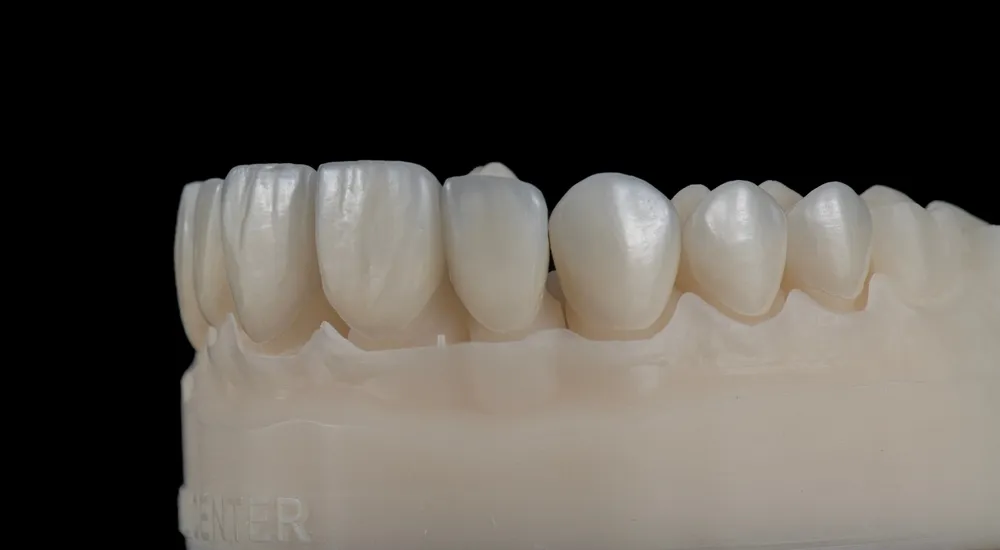
Glazing creates a glass-like surface layer. This layer seals microscopic irregularities. It enhances light reflection and improves stain resistance. Polishing achieves smoothness through mechanical abrasion. Both methods create smooth surfaces, but glazing may provide superior long-term stain resistance. Alawawda (2025) conducted a meta-analysis of eight studies. The standardized mean difference was 1.81, favoring the glazed group for better color stability. The review concluded that glazed lithium disilicate ceramics exhibit better long-term color stability than polished surfaces (Alawawda 2025). Kanat-Erturk (2020) also found that surface finishing procedures significantly influence the color stability of CAD/CAM ceramics (Kanat-Erturk 2020).
Why Does Surface Roughness Matter?
Rougher surfaces retain more plaque and pigments. Microscopic scratches create hiding places for chromogens. Proper laboratory finishing and clinical polishing maintain a smooth surface. This smoothness prevents pigment accumulation and preserves brightness. Brescansin et al. (2021) demonstrated that grinding increased surface roughness and reduced translucency, while polishing reduced roughness and improved light transmittance (Brescansin et al. 2021). Alp et al. (2018) reported that mechanical polishing combined with immersion in tea solutions showed the highest change in lightness, highlighting how surface treatments cause noticeable variations over time (Alp et al. 2018).
Can Damaged Veneer Surfaces Stain More Easily?
Yes. Surface scratches from abrasive toothpaste, aggressive brushing, or improper dental instruments create roughness. This roughness traps pigments and plaque. Patients should avoid abrasive products and seek professional maintenance to preserve the glazed surface. Vichi et al. (2018) found that finishing and polishing systems significantly affect surface roughness and gloss. Systems like Eve Diapro and Diatech ShapeGuard decreased surface roughness and color change compared with untreated surfaces (Vichi et al. 2018). Saleh et al. (2023) examined mouth rinses and staining on monolithic lithium disilicate with different surface treatments. They confirmed that surface finish affects how much staining accumulates on the restoration (Saleh et al. 2023).
Can E.max Veneers Fade Over Time?
What Is the Difference Between Fading and Staining?
Characteristic | Fading | Staining |
Location | Internal material change | External deposit accumulation |
Cause | Optical degradation or material change | Pigment deposits or margin discoloration |
Appearance | Overall shade lightening or dulling | Localized or general darkening |
Removability | Usually permanent | Often removable with cleaning |
Typical in E.max | Less common | More common around margins |
Why Might E.max Veneers Look Less Bright?
Several factors reduce apparent brightness without changing the ceramic colour:
Loss of surface gloss from wear
Plaque and tartar accumulation
Changes in surrounding natural teeth
Gum recession exposing margins
Marginal discoloration
Darkening of the underlying tooth
Kurt and Bal (2019) studied accelerated artificial aging on monolithic ceramics. They found that surface treatments and aging protocols influence optical properties over time, including translucency and color stability (Kurt and Bal 2019). Lee and Choi (2018) evaluated ceramic material and resin cement systems on laminate veneer color stability. They confirmed that the combination of material, cement, and aging determines long-term optical outcomes (Lee and Choi 2018).
Can Root Canal Treatment Cause Darkening Under an E.max Veneer?
Why Do Root Canal-Treated Teeth Change Colour?
Root canal treatment removes the pulp. This can cause internal discoloration of the tooth structure. The dentin may darken as blood components break down. Previous dental materials used in the root canal may also contribute to discoloration. Khim et al. (2018) showed that root canal sealer remnants cause progressive coronal discoloration as chromophores penetrate dentinal tubules. This discoloration progresses in a time-dependent manner regardless of sealer type (Khim et al. 2018). Ioannidis et al. (2013) confirmed that zinc oxide eugenol-based sealers and MTA-based sealers both induce measurable crown discoloration over time (Ioannidis et al. 2013).
How Does Underlying Tooth Colour Affect Veneer Appearance?
E.max veneers possess translucency. This property allows light to pass through the ceramic and reflect off the underlying tooth. A darker underlying tooth changes the final appearance. Ceramic thickness and opacity influence how much the underlying colour shows through. Darker underlying teeth may require more opaque ceramics or different restorative planning. Xing et al. (2017) studied ceramic thickness and resin cement shades on color matching. They found that thinner ceramic veneers resulted in significantly greater color changes than thicker veneers, because thin ceramics allow more of the underlying colour to show through (Xing et al. 2017). Yildirim et al. (2021) demonstrated that cement color and tooth-shaded background significantly affect the final color of lithium disilicate ceramics, especially with high-translucency materials (Yildirim et al. 2021).
What Causes a Dark Line Around an E.max Veneer?
Several factors may create a dark line:
Marginal leakage allowing pigment entry
Cement discoloration over time
Veneer chipping exposing underlying structure
Underlying tooth discoloration
Gum recession exposing the margin
Patients should seek professional examination rather than assuming the ceramic itself has failed. The cause may be treatable. Miletic and Ronagh (2025) found that the colour change of cemented veneers correlated with the initial translucency of the cement, meaning that darker or more opaque cements create more visible marginal lines over time (Miletic and Ronagh 2025).
Do E.max Veneers Stay Whiter Than Natural Teeth?
Why Do Natural Teeth Change Colour with Age?
Natural teeth darken over time due to dietary pigment accumulation, enamel wear exposing darker dentin, dentin changes with age, smoking and tobacco use, and trauma or dental procedures. These changes affect the organic structure of natural enamel and dentin. Paravina et al. (2015) established color difference thresholds in dentistry, noting that values greater than 3.7 represent clinically unacceptable color differences (Paravina et al. 2015).
Why Can E.max Veneers Maintain Their Original Shade?
E.max ceramic resists pigment absorption. Its composition remains stable. The material does not undergo the same aging processes as natural tooth structure. This stability allows veneers to maintain their original shade for many years. Palla et al. (2018) confirmed that IPS e.max CAD and glazed pressed lithium disilicate maintained color stability below perceptible thresholds even after simulated three-year aging in common beverages (Palla et al. 2018).
Can Natural Teeth Become Darker Than E.max Veneers?
Yes. Over time, natural teeth may darken while veneers remain stable. This creates a shade mismatch. Dentists should help patients choose a realistic veneer shade that accounts for potential future darkening of natural teeth. The color difference may become clinically perceptible according to thresholds defined by Paravina et al. (2015), who noted that acceptability thresholds vary by clinical context but generally fall below 3.7 units (Paravina et al. 2015).
How Long Do E.max Veneers Stay White?
What Factors Influence Long-Term Appearance?
Multiple factors affect how long veneers maintain their appearance:
Factor | Impact on Appearance |
Oral hygiene | Prevents plaque and surface deposits |
Surface finish | Maintains gloss and stain resistance |
Quality of bonding | Prevents marginal leakage and cement exposure |
Margin design | Influences plaque accumulation and visibility |
Smoking | Causes surface deposits and gum changes |
Dietary habits | Affects surface deposits on margins |
Professional maintenance | Preserves surface polish and health |
Tooth and gum health | Prevents underlying changes and recession |
Why Do Individual Results Vary?
Long-term appearance depends on both material properties and clinical factors. Two patients with identical E.max veneers may experience different aesthetic outcomes. One patient may maintain bright veneers for fifteen years. Another may notice marginal staining after five years. The difference lies in oral hygiene, diet, smoking habits, and professional maintenance. Alawawda (2025) noted that high heterogeneity exists among studies due to variations in aging protocols and measurement techniques, but the trend favoring glazed lithium disilicate remains consistent across research (Alawawda 2025).
How Can You Prevent E.max Veneers From Looking Stained?
How Should You Maintain Oral Hygiene?
Brush twice daily with a non-abrasive toothpaste. Clean between teeth using floss or interdental brushes. Follow professional recommendations for oral care products. Good hygiene prevents plaque accumulation that can dull veneer appearance. Avoid abrasive products that scratch the glazed surface.
Why Are Regular Dental Check-Ups Important?
Dental professionals examine margins, cement, surface integrity, and gum health. They can identify early signs of discoloration. Professional cleaning removes deposits before they become visible. Regular examinations catch problems early. Saleh et al. (2023) emphasized that professional maintenance of surface treatments helps preserve long-term color stability (Saleh et al. 2023).
Should You Avoid Abrasive Products?
Yes. Highly abrasive products scratch the glazed surface. These scratches trap pigments and reduce shine. Patients should choose gentle, non-abrasive cleaning products recommended by their dentist. Vichi et al. (2018) confirmed that aggressive polishing or improper instruments can damage the surface finish and increase roughness (Vichi et al. 2018).
How Does Smoking Affect Veneer Appearance?
Smoking creates surface deposits and discoloration around veneers. It also increases gum recession risk. Managing tobacco use preserves both veneer appearance and oral health. AlWadei et al. (2026) found that smokeless tobacco caused clinically significant color changes and increased surface roughness in lithium disilicate, demonstrating that tobacco products compromise the smooth surface needed for stain resistance (AlWadei et al. 2026).
Should You Rinse After Consuming Staining Foods?
Yes. Rinse with water after consuming coffee, tea, wine, or dark foods. This simple habit reduces pigment contact time. Patients do not need to eliminate these beverages entirely. They should simply minimize prolonged contact with staining substances.
Can a Dentist Remove Stains From E.max Veneers?
What Does Professional Cleaning Involve?
Dental professionals remove plaque and superficial deposits using appropriate instruments. They avoid abrasive techniques that might damage the glazed surface. Professional cleaning restores brightness without harming the ceramic. Alencar-Silva et al. (2019) showed that toothbrushing with proper protocols can reduce surface discoloration, though the effect depends on the polishing system used (Alencar-Silva et al. 2019).
When Does Professional Polishing Help?
Polishing improves surface brightness when gloss has diminished. This procedure restores light reflection. It removes microscopic surface deposits that create dullness. Vichi et al. (2018) demonstrated that proper intraoral polishing systems significantly decrease surface roughness and improve gloss on lithium disilicate (Vichi et al. 2018).
When Does Marginal Discoloration Require Treatment?
Treatment options depend on the cause:
Polishing for surface deposits
Cleaning for plaque accumulation
Repair for localized margin issues
Replacement when the veneer or cement has failed
The dentist must evaluate the specific cause before recommending treatment. Hoorizad et al. (2021) noted that resin cements show significant discoloration over time, which may require intervention at the margin even when the ceramic remains stable (Hoorizad et al. 2021).
Can You Whiten E.max Veneers If They Look Yellow?
Does Teeth Whitening Change Ceramic Colour?
No. Bleaching agents affect natural tooth structure. They do not alter lithium disilicate ceramic. The veneer remains the same shade regardless of whitening treatment. This is a fundamental difference between ceramic restorations and natural teeth.
Why Can Whitening Create a Colour Mismatch?
Surrounding natural teeth may become lighter after whitening. The E.max veneer stays the same shade. This creates a visible difference between the veneer and natural teeth. Patients should consider this before starting whitening treatment. Paravina et al. (2015) established that color differences exceeding perceptibility thresholds become clinically noticeable, especially in the anterior aesthetic zone (Paravina et al. 2015).
What Should You Do If Veneers No Longer Match Your Teeth?
Seek professional evaluation. Options include cleaning, polishing, whitening surrounding teeth, or replacing restorations. The dentist will recommend the most appropriate approach based on the specific situation. Xing et al. (2017) emphasized that veneer thickness and cement shade must be carefully planned to avoid future mismatch as natural teeth change color (Xing et al. 2017).
E.max Veneers vs Composite Veneers: Which Stains More Easily?
How Colour-Stable Is E.max?
E.max shows high resistance to optical change. The lithium disilicate structure prevents pigment absorption. Studies confirm minimal colour change over extended periods. Palla et al. (2018) found that glazed lithium disilicate specimens maintained color stability below clinically perceptible levels after simulated aging (Palla et al. 2018).
How Colour-Stable Is Composite Resin?
Composite resin contains organic matrix components. These components absorb pigments more readily. Composite veneers show greater susceptibility to surface discoloration and optical change over time. Atala (2026) found that resin nanoceramic and microhybrid resin composite materials exhibited clinically unacceptable color changes after coffee immersion and toothbrushing, with delta E values exceeding 3.5 (Atala 2026).
Why Does Material Choice Matter for Long-Term Aesthetics?
Scientific evidence consistently shows greater colour stability for glass-ceramics compared with resin-ceramic materials. Patients who prioritize long-term aesthetic stability should consider this difference when choosing between E.max and composite veneers. The dense crystalline structure of lithium disilicate provides a barrier that resin matrices cannot match.
When Should You See a Dentist About Discoloration?
What Warning Signs Require Attention?
Watch for these indicators:
A new dark line around the veneer
Sudden colour changes
A dark spot beneath the veneer
Veneer chipping or cracking
Gum recession exposing the margin
Persistent discoloration that does not improve after professional cleaning
Why Should You Seek Professional Evaluation?
Discoloration can indicate problems with the margin, cement, underlying tooth, or restoration. It rarely means the E.max ceramic itself has stained. Early evaluation allows for simpler, less invasive treatment. Khim et al. (2018) showed that underlying tooth discoloration from root canal sealers progresses over time and may require intervention beneath the veneer (Khim et al. 2018). Miletic and Ronagh (2025) confirmed that cement-related discoloration requires clinical assessment because the ceramic itself remains stable (Miletic and Ronagh 2025).
Frequently Asked Questions About E.max Veneer Staining
Can E.max Veneers Stain Over Time?
E.max veneers show strong resistance to staining. However, surrounding areas, bonding materials, surface deposits, or the underlying tooth may discolor over time.
Can Coffee Stain E.max Veneers?
Coffee does not penetrate the ceramic. It may create surface deposits or marginal staining that professional cleaning can remove. Palla et al. (2018) confirmed that glazed lithium disilicate resists coffee-induced color change (Palla et al. 2018).
Can Tea Stain E.max Veneers?
Tea affects E.max veneers similarly to coffee. The ceramic resists absorption, but margins and deposits may show discoloration. Alp et al. (2018) found that tea immersion caused noticeable lightness changes in some surface treatments (Alp et al. 2018).
Can Smoking Turn E.max Veneers Yellow?
Smoking creates surface deposits that appear yellow. The ceramic itself does not turn yellow. Professional cleaning removes these deposits. AlWadei et al. (2026) demonstrated that tobacco exposure causes significant surface changes on lithium disilicate (AlWadei et al. 2026).
Why Do My E.max Veneers Look Darker Than Before?
Underlying tooth changes, marginal discoloration, cement changes, or surface deposit accumulation may create a darker appearance.
Can E.max Veneers Be Whitened?
No. Whitening agents do not change ceramic colour. They only affect natural tooth structure.
Can Stains Around E.max Veneers Be Removed?
Yes. Professional cleaning and polishing remove most surface deposits and marginal stains.
Do E.max Veneers Change Colour After a Root Canal?
The veneer itself does not change. The underlying tooth may darken after root canal treatment, creating a darker appearance through the translucent ceramic. Khim et al. (2018) documented this progressive discoloration from sealer remnants (Khim et al. 2018).
How Can I Keep My E.max Veneers White?
Maintain good oral hygiene, attend regular dental check-ups, avoid abrasive products, manage smoking, and rinse after consuming staining foods and drinks.
Conclusion: Do E.max Veneers Remain Colour-Stable Over Time?
E.max veneers maintain strong colour stability over time. The lithium disilicate ceramic resists pigment absorption and optical change. Palla et al. (2018) confirmed that properly glazed lithium disilicate maintains color stability below clinically perceptible thresholds even after simulated years of beverage exposure (Palla et al. 2018). Alawawda (2025) synthesized evidence from multiple studies and concluded that glazing provides superior long-term color stability compared with polishing alone (Alawawda 2025).
However, patients may notice apparent discoloration from other sources. Marginal staining, cement discoloration, surface deposits, underlying tooth changes, and alterations in neighbouring teeth can all affect the overall appearance. Miletic and Ronagh (2025) demonstrated that resin cement color stability directly influences veneer appearance over time (Miletic and Ronagh 2025). Atala (2026) showed that ceramic materials outperform resin-based alternatives in resisting discoloration from coffee and mechanical wear (Atala 2026).
Good oral hygiene, appropriate professional maintenance, and regular dental examinations preserve veneer aesthetics. Patients should understand that a noticeable colour change usually indicates a treatable problem rather than a failure of the ceramic material itself. When discoloration appears, seek dental assessment promptly. The cause may be simple to address, and early intervention prevents more complex problems.
References
Alawawda, Osayd. "Effect of Surface Treatments on Color Stability of Lithium Disilicate: A Systematic Review and Meta-Analysis." Journal of Stomatology, vol. 77, no. 4, 2025, pp. 57048.
Alencar-Silva, F. J., et al. "Effect of Beverage Solutions and Toothbrushing on the Surface Roughness, Microhardness, and Color Stainability of a Vitreous CAD-CAM Lithium Disilicate Ceramic." Journal of Prosthetic Dentistry, vol. 121, no. 4, 2019, pp. 711.e1-711.e6.
Alp, G., et al. "Effect of Surface Treatments and Coffee Thermocycling on the Color and Translucency of CAD-CAM Monolithic Glass-Ceramic." Journal of Prosthetic Dentistry, vol. 120, no. 2, 2018, pp. 263-268.
AlWadei, Mohammed Hussain, et al. "Correlation between the Color Stability and Contact Profilometry Results of Different CAD/CAM Ceramic Materials After Staining with Black Shammah and DZRT Smokeless Tobacco." Tobacco Induced Diseases, vol. 24, 2026, p. 50.
Atala, Mustafa Hayati. "Color Stability and Surface Roughness of CAD/CAM Hybrid Ceramics and Resin Composites After Simulated Toothbrushing in Coffee: An In Vitro Study." Applied Sciences, vol. 16, no. 3, 2026, p. 1576.
Brescansin, F. N., et al. "Effect of Different Surface Treatments on Optical, Colorimetric, and Surface Characteristics of a Lithium Disilicate Glass-Ceramic." Journal of Esthetic and Restorative Dentistry, vol. 33, no. 6, 2021, pp. 1017-1028.
Gül, Ö. D., and S. Agüloğlu. "Evaluating the Color Stability of Two Esthetic Ceramic Materials After Different Surface Treatments and Accelerated Aging Procedures." International Dental Research, vol. 13, no. 2, 2023, pp. 104-111.
Hoorizad, M., et al. "Influence of Resin Cement on Color Stability of Ceramic Veneers: In Vitro Study." Biomaterials Investigations in Dentistry, vol. 8, no. 1, 2021, pp. 11-17.
Ioannidis, K., et al. "Spectrophotometric Analysis of Crown Discoloration Induced by MTA- and ZnOE-based Sealers." Journal of Applied Oral Science, vol. 21, no. 2, 2013, pp. 138-144.
Khim, T. P., et al. "Prevention of Coronal Discoloration Induced by Root Canal Sealer Remnants Using Dentin Bonding Agent: An In Vitro Study." Journal of Conservative Dentistry, vol. 21, no. 5, 2018, pp. 497-501.
Kanat-Erturk, B. "Color Stability of CAD/CAM Ceramics Prepared with Different Surface Finishing Procedures." Journal of Prosthodontics, vol. 29, no. 2, 2020, pp. 166-172.
Kurt, M., and B. T. Bal. "Effects of Accelerated Artificial Aging on the Translucency and Color Stability of Monolithic Ceramics with Different Surface Treatments." Journal of Prosthetic Dentistry, vol. 121, no. 4, 2019, pp. 712.e1-712.e8.
Lee, S. M., and Y. S. Choi. "Effect of Ceramic Material and Resin Cement Systems on the Color Stability of Laminate Veneers After Accelerated Aging." Journal of Prosthetic Dentistry, vol. 120, no. 1, 2018, pp. 99-106.
Miletic, Vesna, and Asana Pour Ronagh. "Staining Analysis of Resin Cements and Their Effects on Colour and Translucency Changes in Lithium Disilicate Veneers." Polymers, vol. 17, no. 3, 2025, p. 362.
Palla, E. S., et al. "Color Stability of Lithium Disilicate Ceramics After Aging and Immersion in Common Beverages." Journal of Prosthetic Dentistry, vol. 119, no. 4, 2018, pp. 632-642.
Paravina, R. D., et al. "Color Difference Thresholds in Dentistry." Journal of Esthetic and Restorative Dentistry, vol. 27, suppl. 1, 2015, pp. S1-S9.
Saleh, K. A., et al. "Effect of Mouth Rinses on the Stainability of Monolithic Lithium Disilicate Glass-Ceramics with Different Surface Treatments: An In Vitro Study." Journal of Prosthetic Dentistry, vol. 130, no. 5, 2023, pp. 935.e1-935.e6.
Vichi, A., et al. "Effect of Finishing and Polishing on Roughness and Gloss of Lithium Disilicate and Lithium Silicate Zirconia Reinforced Glass Ceramic for CAD/CAM Systems." Operative Dentistry, vol. 43, no. 1, 2018, pp. 90-100.
Xing, W., et al. "The Effect of Ceramic Thickness and Resin Cement Shades on the Color Matching of Ceramic Veneers in Discolored Teeth." Odontology, vol. 105, no. 4, 2017, pp. 460-466.
Yildirim, B., et al. "Effect of Cement Color and Tooth-Shaded Background on the Final Color of Lithium Disilicate and Zirconia-Reinforced Lithium Silicate Ceramics: An In Vitro Study." Journal of Esthetic and Restorative Dentistry, vol. 33, no. 2, 2021, pp. 380-386.